Algerian coffee: what it is, how to make it, where to buy it
Algerian coffee explained: un café, nos nos, the moka, the djezwa, qahwa maâtra and mazagran, where the tradition comes from, and where to buy Algerian specialty coffee in Switzerland.
Algerian coffee is not one drink. It is a way of serving coffee: strong, clean, often perfumed, and offered as a welcome. Here are the cups it is made of, where it comes from, what changes when it becomes specialty coffee, and where to buy it in Switzerland.
What is Algerian coffee?
In Algeria, coffee is part of the rhythm of the day, of gatherings and of hospitality. Serving coffee is an act of respect, not a transaction. The bean comes first, and the coffee must smell alive.
Six cups make up most of it:
- Un café. The café at the counter: short, dense, drunk in three sips. Recipe.
- Nos nos. Half coffee, half milk. Nos nos means half and half, and that is the whole recipe. Recipe.
- The morning moka. The pot on every Algerian stove. Low heat is the whole secret. Recipe.
- Coffee in the djezwa. The small pot with the long handle, also called a briq: extra-fine coffee, slow heat, and a foam that rises. Recipe.
- Qahwa maâtra. Perfumed coffee. For generations, Algerians have scented their coffee with cinnamon, vanilla or orange blossom water.
- Mazagran. Strong coffee cooled with water to face the heat, named after the town of Mazagran near Mostaganem. Today it is served over ice, and it is often called the first iced coffee in the world. Recipe.
Where Algerian coffee comes from
Algerian coffee traditions were not born alone. Coffee was born in Ethiopia, where Coffea arabica grows wild in the region of Kaffa. By the 15th century, Sufis in the Yemeni port of Mocha were roasting and brewing it, and by the 16th century Ottoman trade routes linked Yemen, Egypt and the Algerian coast. Coffee houses, the maqha, opened from Algiers to Constantine and served coffee in small cups, sometimes perfumed with cardamom or rose water.
That is why the floral, spiced balance of traditional Algerian coffee still carries its Ethiopian and Yemeni origins. The full story: the Ethiopian and Yemeni roots of Algerian coffee.
Algerian specialty coffee: what changes
The recipes stay the same. What changes is the coffee inside them.
- At the farm. We go to the farms and pick with our partners.
- Tasted lot by lot. Every coffee and every roast was chosen with one question: does this recipe taste the way it should?
- Fresh grinding. Once coffee is ground it starts losing its aroma within minutes. Whole beans, ground just before brewing, give a more intense scent and a sweeter cup. How to grind for each method.
- A coffee for each cup. Perfume and spice need a smooth, low-acid coffee; a mazagran wants a floral, bright one; milk wants a naturally sweet one.
We don't reinvent Algerian coffee. We look for the coffee that brings our recipes out.
Our coffees for these cups
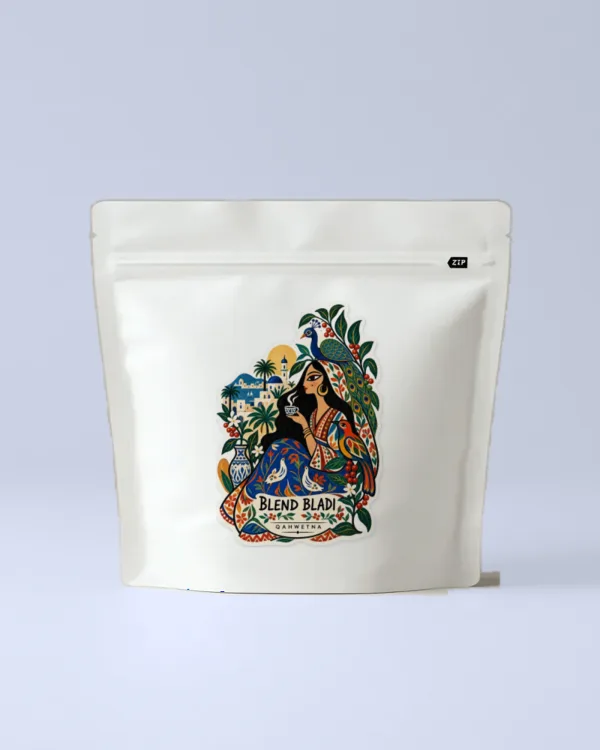
- For un café and the morning moka: Blend Bladi, our house blend, for those who just want un café.
- For a strong cup, naturally sweet: Rais Hamidoux.
- For a fruitier mazagran: Ethiopia Guji G1.
Every coffee can be sent as whole beans or ground for your method. See all our coffees.
Not to be confused with
- "Algerian coffee" in Vienna. In some Viennese cafés, an "Algerian coffee" is a dessert drink made with coffee, egg liqueur and whipped cream. It is a café speciality with an Algerian name, not a drink from Algeria.
- Algerian Coffee Stores in London. A historic coffee shop in Soho, opened in 1887. It sells coffees from many origins and is not a brand of Algerian coffee.
Where to buy Algerian specialty coffee in Switzerland
Qahwetna (قهوتنا, "our coffee") is an Algerian specialty coffee brand based in Switzerland. Our coffees come in 200 g bags, as whole beans or ground for your method. We deliver anywhere in Switzerland in 1 to 3 working days; delivery costs CHF 8.50 and is free from CHF 90. You pay with TWINT. Cafés, restaurants and offices can order wholesale.
Questions
What does Algerian coffee taste like?
Strong and short, but clean rather than burnt. Traditional cups are often perfumed with orange blossom water, cinnamon or vanilla.
How do you make Algerian coffee at home?
The two classic pots are the moka and the djezwa. Grind fresh and use low heat; our recipes show each method step by step.
Is mazagran Algerian?
Yes. It takes its name from the town of Mazagran near Mostaganem, where strong coffee cooled with water was drunk to face the heat. The history and two recipes.
 Brewed with
Blend Bladi
Dark chocolate, roasted nuts, caramel · CHF 18